Wei Qi and Sleep: The Rhythm of Rest and Protection

What is Wei Qi? In Traditional Chinese Medicine (TCM), Wei Qi (卫气), or Defensive Qi, circulates throughout the body in a rhythmic cycle. According to classical texts, Wei Qi completes 50 cycles in a 24-hour period:

  • 25 cycles during the daytime (yang phase), flowing through the body’s yang layers and the exterior to protect against external pathogens.
  • 25 cycles during the nighttime (yin phase), moving inward to nourish and repair the organs.

Wei Qi follows the 12-hour day-night cycle and aligns with the organ clock, circulating approximately once every 28.8 minutes through the body’s meridian system. This rhythm is essential for immunity, vitality, and overall health.

Wei Qi’s circulation plays a crucial role in sleep quality and overall restorative processes. Here’s how it affects sleep in TCM:

Wei Qi and Sleep Regulation

  1. Daytime (Yang Phase: External Circulation)
    • Wei Qi circulates at the body’s surface, protecting against external pathogens and supporting physical activity.
    • This active, outward movement keeps the body alert and energized.
  2. Nighttime (Yin Phase: Internal Circulation)
    • As the body prepares for sleep, Wei Qi retreats inward to nourish the zang-fu organs and support deep, restorative rest.
    • If this transition is smooth, sleep is restful and rejuvenating.

Imbalances in Wei Qi Circulation and Sleep Disorders

  • Wei Qi Failing to Retreat Properly → Insomnia or Restlessness
    • If Wei Qi remains too active on the body’s surface (excess Yang), falling asleep can be difficult. This can result in difficulty calming the mind, vivid dreams, or waking frequently at night.
    • Often seen in conditions like Liver Yang Rising, Heart Fire, or Yin Deficiency with Empty Heat.
  • Weak Wei Qi → Light Sleep & Frequent Waking
    • When Wei Qi is weak or deficient, it may not anchor properly in the body’s interior at night, leading to light sleep, frequent waking, and lack of deep rest.
    • This is often related to Spleen and Lung Qi Deficiency or Heart and Kidney Disharmony.
  • Disrupted Wei Qi Flow → Night Sweats & Restlessness
    • If Wei Qi circulation is erratic, it can cause night sweats (especially in Yin Deficiency), leading to nighttime overheating and restlessness.

Supporting Healthy Wei Qi Flow for Better Sleep

  • Regulate the Sleep-Wake Cycle: Follow natural light patterns to support Wei Qi’s smooth transition from external (day) to internal (night).
  • Acupuncture & Herbs:
    • Heart & Liver imbalance: HT-7 (Shenmen), LV-3 (Taichong) for calming the mind.
    • Yin Deficiency: KD-3 (Taixi), SP-6 (Sanyinjiao) to nourish Yin and anchor Qi.
    • Wei Qi Deficiency: ST-36 (Zusanli), LI-4 (Hegu) to strengthen protective Qi.
    • Herbs: Suan Zao Ren, Bai Zi Ren, Long Gu, Mu Li for sleep support.
  • Breathwork & Meditation: Practices like Qi Gong, Tai Chi, or meditation help regulate Wei Qi movement and calm the Shen (spirit).

Consult a licensed acupuncturist or herbalist to assess your constitution and recommend specific herbs, acupuncture, and dietary adjustments.

TCM Organs Overview

In Traditional Chinese Medicine (TCM), the twelve zang-fu organs are divided into six zang (yin) organs and six fu (yang) organs. Each has its own function, relationships, and role in maintaining the body’s balance.

Zang (Yin) Organs – Storage and Regulation

  1. Heart (Xin, 心) – The Emperor
    • Governs Blood and vessels
    • Houses the Shen (Spirit/Mind)
    • Controls circulation and influences mental activity
  2. Liver (Gan, 肝) – The General/Strategist
    • Stores Blood and regulates its volume
    • Ensures the smooth flow of Qi
    • Controls emotions and planning
  3. Spleen (Pi, 脾) – The Granary Official
    • Governs Transformation & Transportation (digestion)
    • Controls Blood (keeps it within vessels)
    • Houses Yi (thought, intellect, memory)
  4. Lung (Fei, 肺) – The Prime Minister
    • Governs Qi and Respiration
    • Regulates Water metabolism
    • Controls Wei Qi (Defensive Qi) and pores
  5. Kidney (Shen, 肾) – The Minister of Power
    • Stores Essence (Jing) and governs birth, growth, reproduction
    • Produces Marrow, which nourishes the brain and bones
    • Houses Zhi (Willpower)
  6. Pericardium (Xin Bao, 心包) – The Protector of the Heart
    • Shields the Heart from external and emotional disturbances
    • Assists in blood circulation
    • Plays a role in emotional relationships

Fu (Yang) Organs – Transport and Transformation

  1. Small Intestine (Xiao Chang, 小肠) – The Separator of the Pure from the Impure
    • Receives food from the stomach and extracts nutrients
    • Separates pure from turbid, sending waste to the Large Intestine and Bladder
  2. Gallbladder (Dan, 胆) – The Decision Maker
    • Stores and excretes bile to aid digestion
    • Governs decision-making and courage
  3. Stomach (Wei, 胃) – The Official of Fermentation
    • Receives and decomposes food
    • Works with the Spleen to transform food into Qi and Blood
  4. Large Intestine (Da Chang, 大肠) – The Dreg Official
  • Governs the movement of waste and water absorption
  • Related to letting go physically and emotionally
  1. Bladder (Pang Guang, 膀胱) – The Water Reservoir
  • Stores and excretes urine – the transformation, evaporation, distribution, and excretion of body fluids.
  • Works with the Kidneys to regulate fluids
  1. Triple Burner (San Jiao, 三焦) – The Irrigation Official
  • Regulates water pathways and Qi movement
  • Divided into Upper, Middle, and Lower Jiao to coordinate bodily functions

Each organ not only has a physiological function but also a spiritual and emotional aspect in TCM. This holistic approach ties the physical, mental, and energetic aspects of health together.

Five Elements & Emotional Health

In Five Element Theory (Wu Xing) from Asian Medicine, emotional health is deeply connected to the balance of the five elements—Wood, Fire, Earth, Metal, and Water. Each element corresponds to specific organs, emotions, and cycles of energy in the body. When an element is imbalanced, it can manifest as emotional disturbances.

1. Wood (Liver & Gallbladder) → Emotions: Anger, Frustration, Resentment

  • Balanced Wood: Clear decision-making, healthy ambition, patience.
  • Excess Wood (Liver Qi Stagnation): Irritability, frustration, outbursts of anger, tension headaches.
  • Deficient Wood (Liver Blood/Yin Deficiency): Indecisiveness, lack of motivation, depression.
  • Healing Practices:
    • Move Qi with gentle exercise (Tai Chi, Qi Gong, walking).
    • Express emotions healthily—journaling, creative arts.
    • Use herbs like Chai Hu (Bupleurum) to soothe Liver Qi.

2. Fire (Heart & Small Intestine) → Emotions: Joy, Excitement, Anxiety

  • Balanced Fire: Healthy enthusiasm, love, good communication.
  • Excess Fire (Heart Fire Rising): Overexcitement, restlessness, anxiety, insomnia, mania.
  • Deficient Fire (Heart Qi/Yang Deficiency): Lack of joy, sadness, low self-esteem.
  • Healing Practices:
    • Cultivate inner peace with meditation, prayer, laughter.
    • Cool excess Fire with lotus seed tea or Bai He (Lily Bulb).
    • Strengthen Fire with warm foods, social connection, and music.

3. Earth (Spleen & Stomach) → Emotions: Worry, Overthinking, Pensiveness

  • Balanced Earth: Nurturing, grounded, ability to focus.
  • Excess Earth (Dampness or Spleen Qi Stagnation): Overthinking, worry, obsession, brain fog.
  • Deficient Earth (Spleen Qi Deficiency): Fatigue, digestive issues, self-doubt, feeling unsupported.
  • Healing Practices:
    • Eat warm, cooked foods (avoid cold/raw foods).
    • Ground yourself with routine, nature walks, self-care.
    • Strengthen digestion with Ginseng, Dang Shen (Codonopsis), and Ginger Tea.

4. Metal (Lung & Large Intestine) → Emotions: Grief, Sadness, Letting Go

  • Balanced Metal: Ability to process grief, strong boundaries, integrity.
  • Excess Metal (Lung Qi Constraint): Prolonged sadness, difficulty letting go, isolation.
  • Deficient Metal (Lung Qi Deficiency): Low energy, vulnerability to illness, lack of inspiration.
  • Healing Practices:
    • Deep breathing (Qi Gong, meditation) to nourish the Lungs.
    • Release emotions with crying, journaling, therapy.
    • Strengthen Metal with spicy foods (garlic, radish) and warm teas like Bai He (Lily Bulb) for grief.

5. Water (Kidney & Bladder) → Emotions: Fear, Insecurity, Willpower

  • Balanced Water: Courage, resilience, wisdom.
  • Excess Water (Kidney Yin Deficiency or Fear Stagnation): Chronic fear, paranoia, excessive caution.
  • Deficient Water (Kidney Yang Deficiency): Lack of willpower, insecurity, exhaustion, fear of change.
  • Healing Practices:
    • Strengthen Kidneys with warm, nourishing foods (bone broth, black sesame, walnuts).
    • Address fear through gentle movement, self-reflection, and mindfulness.
    • Use He Shou Wu (Fo-Ti) or Goji berries to nourish Kidney energy.

Balancing Emotions with the Five Elements

  1. Identify your dominant emotional pattern (anger, fear, worry, sadness, overexcitement).
  2. Balance the corresponding organ system through food, herbs, movement, and mindset shifts.
  3. Use Elemental Cycles:
    • Control Cycle: If one element is excessive, another can temper it (e.g., Water (fear) can control excessive Fire (anxiety)).
    • Generating Cycle: Strengthen a deficient element by supporting the one that nourishes it (e.g., Earth (digestion) supports Metal (lungs), so improving digestion helps emotional resilience).

(All the herbs mentioned above should be used under the guidance of a licensed practitioner)

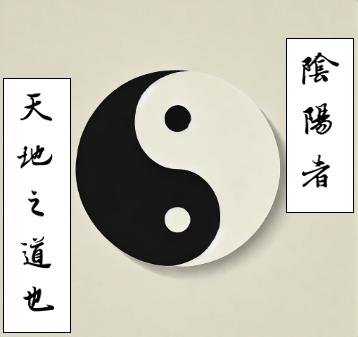
Yin and Yang

In Traditional Chinese Medicine (TCM), Yin and Yang are fundamental concepts that describe the dynamic balance of opposing but complementary forces in the body and nature. This philosophy, rooted in Daoist thought, provides a framework for understanding health, disease, and treatment. Here’s why Yin and Yang are important in TCM:

1. Balance is Key to Health

  • Health is achieved when Yin and Yang are in harmony.
  • Imbalances (excess or deficiency) lead to disharmony, which can manifest as illness.

2. Defines Physiological Functions

  • Yin represents the cooling, nourishing, and moistening aspects of the body (e.g., blood, fluids, rest).
  • Yang represents warmth, activity, and transformation (e.g., metabolism, movement, energy).
  • The interaction between Yin and Yang ensures proper bodily functions.

3. Guides Diagnosis

  • TCM practitioners assess whether a person has a Yin deficiency (e.g., dryness, heat, insomnia) or a Yang deficiency (e.g., cold limbs, fatigue, slow digestion).
  • Symptoms often reflect an excess or deficiency of one aspect.

4. Directs Treatment Strategies

  • Treatments aim to restore Yin-Yang balance.
  • For Yin deficiency, cooling and nourishing herbs/foods are used.
  • For Yang deficiency, warming and invigorating therapies (moxibustion, warming herbs) are applied.
  • Acupuncture points are selected to regulate Yin and Yang flow.

5. Explains Relationships in the Body

  • Every organ has a Yin and Yang aspect (e.g., Kidney-Yin vs. Kidney-Yang).
  • The interaction of Yin and Yang influences internal organ function and overall vitality.

6. Influences Lifestyle Recommendations

  • Balance in diet, sleep, emotions, and activity is encouraged.
  • Overwork depletes Yang, excessive stress depletes Yin—lifestyle adjustments help maintain harmony.

7. Yin-Yang in Nature and the Cosmos

  • Just as day and night, summer and winter alternate, the human body follows cycles.
  • TCM treatments often consider seasonal and environmental Yin-Yang influences.

By understanding Yin and Yang, TCM provides a holistic and dynamic approach to wellness, addressing both symptoms and root causes of disease.